
Business problem
Production preparation required the same assembly state to be interpreted separately for BOMs, flat patterns, DXFs, labels, lists, and package collection.

Assembly traversal, BOM classification, drawing generation, flat-pattern detection, DXF export, Pack-and-Go, labels, and cut/buy/pack lists were coordinated into reviewable production output rather than treated as disconnected file exports.
Engineering systems implementationFry RegletCAD Technical Manager; Operations Technology SpecialistAug 2017–Sep 2021
Production preparation required the same assembly state to be interpreted separately for BOMs, flat patterns, DXFs, labels, lists, and package collection.
CAD Technical Manager; Operations Technology Specialist
Assembly traversal, classification rules, flat-pattern detection, export logic, and document collection were coordinated into one reviewable output flow.
classified BOM · cut/crate/accessory/purchase lists · material totals
Contemporaneous résumé aggregate across the Fry Reglet role, not one product or generator.
Disconnected exports created repeated checking and made exceptions harder to see before fabrication handoff.
Production preparation required the same assembly state to be interpreted separately for BOMs, flat patterns, DXFs, labels, lists, and package collection.
One assembly review produced classified material output, machine-readable files, labels, lists, and a collected production packet.
Assembly traversal, classification rules, flat-pattern detection, export logic, and document collection were coordinated into one reviewable output flow.
The implementation traversed Inventor assemblies, selected structured or parts-only BOM views, detected missing metadata, totaled material, and prepared reviewable Excel output.
Open technical detailAssembly parameters and feature state drove drawing updates, automatic view decisions, iProperties/title blocks, PDF export, and bounded job-package collection.
Open technical detailThe source distinguishes sheet-metal components, detects or creates flat-pattern state, traverses assemblies, and exports bounded DXF output while returning unsupported conditions for review.
Open technical detailThe implementation merged workbook data, expanded tables, calculated label counts and page breaks, and generated production-facing lists and print layouts.
Open technical detailProduction teams received a more coherent handoff while engineering retained visibility into exceptions and release decisions.
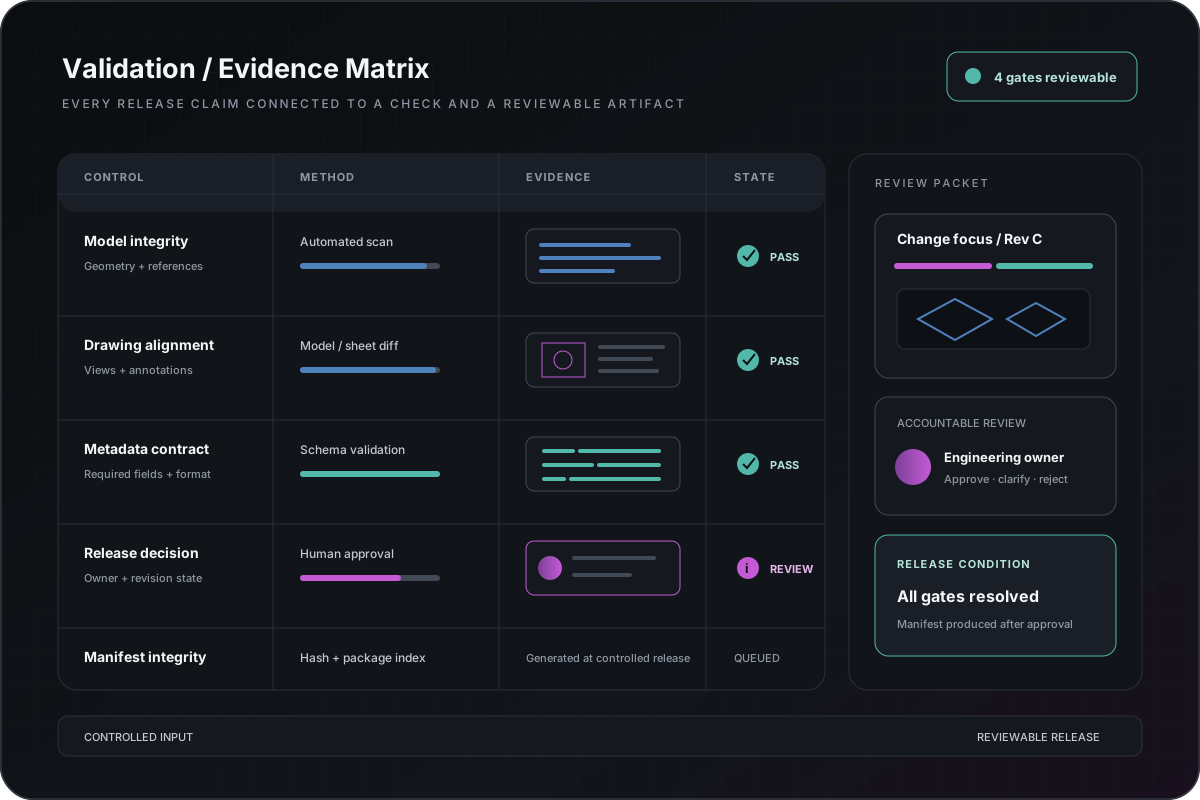
The model shows accepted examples, deterministic checks, exceptions, reviewer decisions, and handoff without exposing protected customer artifacts.
Start with the current workflow, accepted output, connected systems, operational risk, and the first result worth implementing.
Review authorship, inputs, constraints, rules, outputs, integrations, validation, metrics, and source context in directly linkable technical sections.
The implementation traversed Inventor assemblies, selected structured or parts-only BOM views, detected missing metadata, totaled material, and prepared reviewable Excel output.
Demonstrates that BOM automation is classification plus exception ownership, not merely exporting rows.
The model shows accepted examples, deterministic checks, exceptions, reviewer decisions, and handoff without exposing protected customer artifacts.
Order-to-output evidence matrix — Prior employment at Fry Reglet · public demonstrations. A public-safe reconstruction paired with three public demonstrations; it contains no employer drawings or rules.
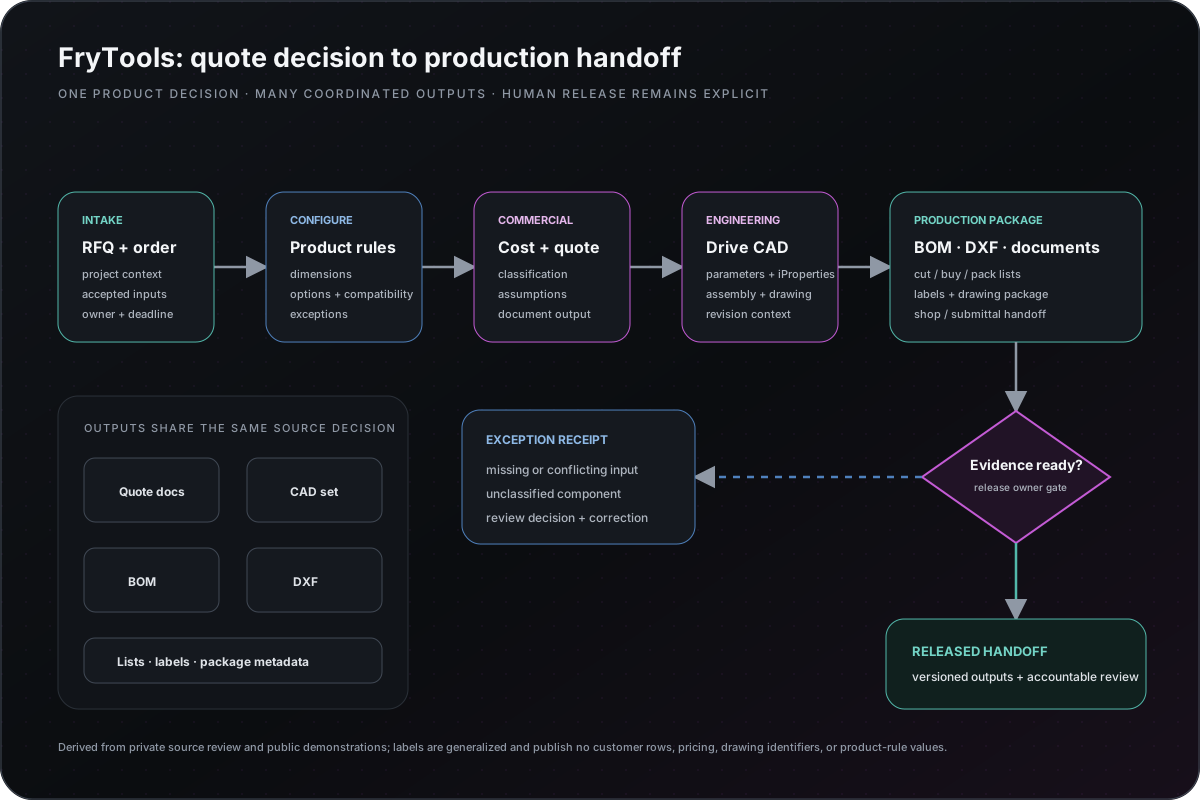
The workflow keeps commercial, engineering, and production outputs tied to one governed source decision and one accountable release gate.
Quote-to-CAD/BOM/document/production flow — Prior employment at Fry Reglet · public demonstrations. Derived from source-backed implementation boundaries without employer records or rules.
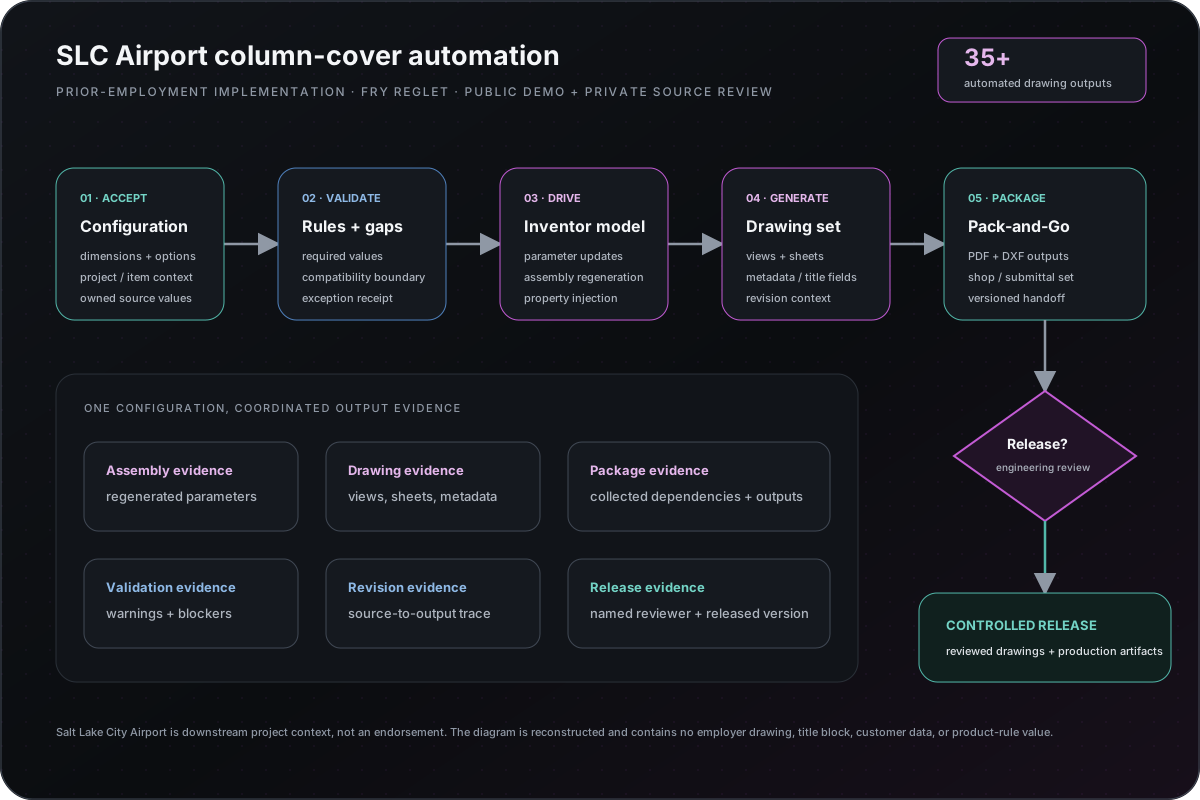
The reconstructed SLC flow exposes coordinated assembly, drawing, package, validation, revision, and release evidence without publishing employer artifacts.
SLC configurator input-to-release flow — Prior employment at Fry Reglet · public demonstrations. Derived from direct source, the contemporaneous overview, and the public demonstration.
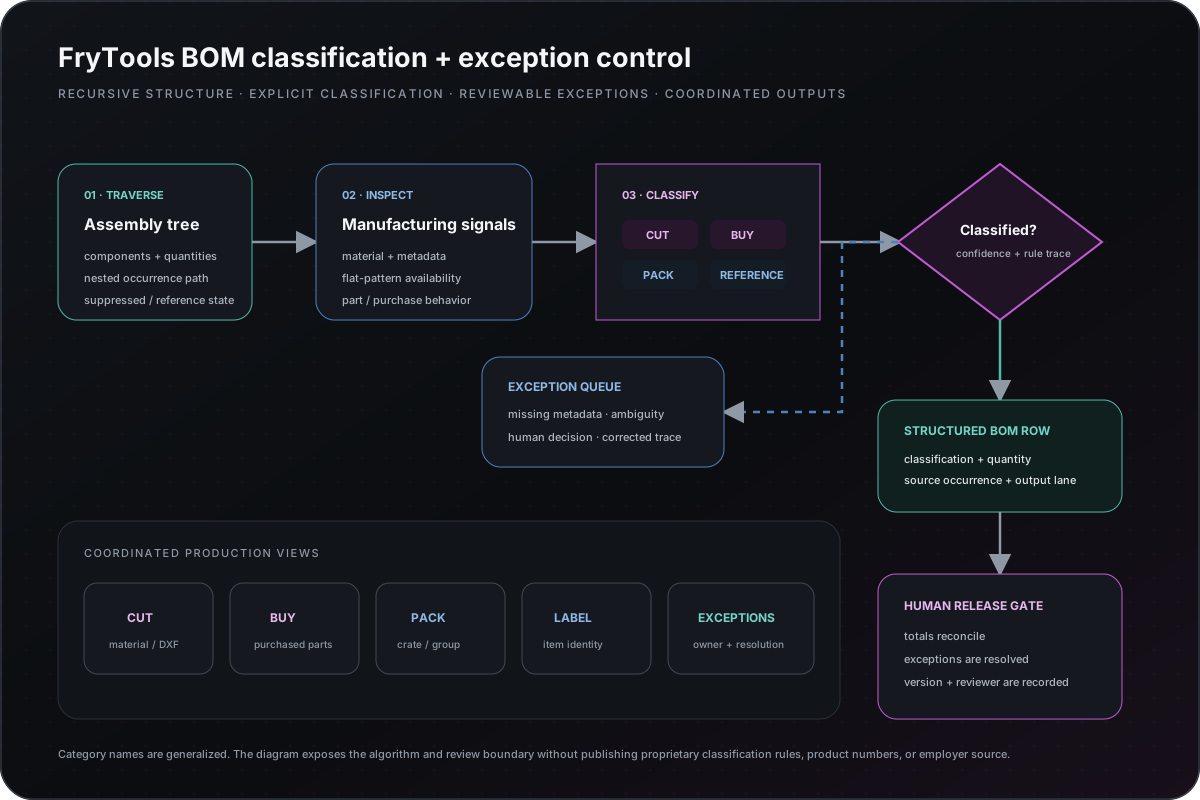
The BOM diagram exposes traversal, classification, exception, reconciliation, and release boundaries while proprietary classification values remain private.
Assembly traversal and BOM classification flow — Prior employment at Fry Reglet · public demonstrations. Derived from the private source census; product-specific rules and records are excluded.
Assembly parameters and feature state drove drawing updates, automatic view decisions, iProperties/title blocks, PDF export, and bounded job-package collection.
Shows how drawing generation must control dependencies, metadata, readability, and release—not just open a template.
The model shows accepted examples, deterministic checks, exceptions, reviewer decisions, and handoff without exposing protected customer artifacts.
Order-to-output evidence matrix — Prior employment at Fry Reglet · public demonstrations. A public-safe reconstruction paired with three public demonstrations; it contains no employer drawings or rules.
The workflow keeps commercial, engineering, and production outputs tied to one governed source decision and one accountable release gate.
Quote-to-CAD/BOM/document/production flow — Prior employment at Fry Reglet · public demonstrations. Derived from source-backed implementation boundaries without employer records or rules.
The reconstructed SLC flow exposes coordinated assembly, drawing, package, validation, revision, and release evidence without publishing employer artifacts.
SLC configurator input-to-release flow — Prior employment at Fry Reglet · public demonstrations. Derived from direct source, the contemporaneous overview, and the public demonstration.
The BOM diagram exposes traversal, classification, exception, reconciliation, and release boundaries while proprietary classification values remain private.
Assembly traversal and BOM classification flow — Prior employment at Fry Reglet · public demonstrations. Derived from the private source census; product-specific rules and records are excluded.
The source distinguishes sheet-metal components, detects or creates flat-pattern state, traverses assemblies, and exports bounded DXF output while returning unsupported conditions for review.
Demonstrates safe CNC handoff by proving component eligibility and exceptions before export.
The model shows accepted examples, deterministic checks, exceptions, reviewer decisions, and handoff without exposing protected customer artifacts.
Order-to-output evidence matrix — Prior employment at Fry Reglet · public demonstrations. A public-safe reconstruction paired with three public demonstrations; it contains no employer drawings or rules.
The workflow keeps commercial, engineering, and production outputs tied to one governed source decision and one accountable release gate.
Quote-to-CAD/BOM/document/production flow — Prior employment at Fry Reglet · public demonstrations. Derived from source-backed implementation boundaries without employer records or rules.
The reconstructed SLC flow exposes coordinated assembly, drawing, package, validation, revision, and release evidence without publishing employer artifacts.
SLC configurator input-to-release flow — Prior employment at Fry Reglet · public demonstrations. Derived from direct source, the contemporaneous overview, and the public demonstration.
The BOM diagram exposes traversal, classification, exception, reconciliation, and release boundaries while proprietary classification values remain private.
Assembly traversal and BOM classification flow — Prior employment at Fry Reglet · public demonstrations. Derived from the private source census; product-specific rules and records are excluded.
The implementation merged workbook data, expanded tables, calculated label counts and page breaks, and generated production-facing lists and print layouts.
Shows the last-mile algorithms that make engineering data usable at purchasing, fabrication, and packing stations.
The model shows accepted examples, deterministic checks, exceptions, reviewer decisions, and handoff without exposing protected customer artifacts.
Order-to-output evidence matrix — Prior employment at Fry Reglet · public demonstrations. A public-safe reconstruction paired with three public demonstrations; it contains no employer drawings or rules.
The workflow keeps commercial, engineering, and production outputs tied to one governed source decision and one accountable release gate.
Quote-to-CAD/BOM/document/production flow — Prior employment at Fry Reglet · public demonstrations. Derived from source-backed implementation boundaries without employer records or rules.
The reconstructed SLC flow exposes coordinated assembly, drawing, package, validation, revision, and release evidence without publishing employer artifacts.
SLC configurator input-to-release flow — Prior employment at Fry Reglet · public demonstrations. Derived from direct source, the contemporaneous overview, and the public demonstration.
The BOM diagram exposes traversal, classification, exception, reconciliation, and release boundaries while proprietary classification values remain private.
Assembly traversal and BOM classification flow — Prior employment at Fry Reglet · public demonstrations. Derived from the private source census; product-specific rules and records are excluded.
3,000+ role-wide drawings — Contemporaneous résumé aggregate across the Fry Reglet role, not one product or generator.
Prior employment at Fry Reglet · public demonstrations. 2021 résumé; the role-wide scope is stated explicitly to avoid project-level over-attribution.
Prior employment at Fry Reglet · public demonstrations. Private solution-capability ledger cross-checked against source and project inventory; employer rules and code are not published.
Prior employment at Fry Reglet · public demonstrations. Public YouTube demonstrations reviewed July 2026.
Prior employment at Fry Reglet · public demonstrations. A contemporaneous one-year overview and 2021 résumé support the qualified 35+ SLC automated-drawing and 3,000+ role-wide drawing observations.
Publication limit: The role-wide drawing total is not attributed to one configurator, and conflicting SLC cover/unit totals remain unpublished.
Prior employment at Fry Reglet · public demonstrations. A private source census confirms assembly traversal, drawing/PDF/DXF generation, BOM classification, parameter control, Pack-and-Go, and label-layout categories.
Publication limit: No source, product rule, identifier, path, title block, customer record, or employer screenshot is published.
Prior employment at Fry Reglet · public demonstrations. The SLC column configurator, Door Frame generator form, and connected Door Frame CAD/BOM/quote demonstrations remain publicly reviewable.
Publication limit: The videos demonstrate workflow behavior; they do not publish employer source or imply Fry Reglet endorsement.
Start with the users, current workflow, accepted output, failure mode, connected systems, and the first implementation decision.