
Business problem
The problem was not simply replacing Excel. The useful rules and operator knowledge had to survive while request quality, configuration state, documents, status, and responsibility became easier to inspect.

Thomas Smith helped move a configurable-product quote workflow from Excel workbooks and separate desktop utilities toward FryTools: an integrated .NET platform connecting intake, configuration, CAD, BOM, documents, ERP services, reporting, and accountable handoffs.
Engineering systems implementationFry RegletCAD Technical Manager; Operations Technology SpecialistAug 2017–Sep 2021
The problem was not simply replacing Excel. The useful rules and operator knowledge had to survive while request quality, configuration state, documents, status, and responsibility became easier to inspect.
CAD Technical Manager; Operations Technology Specialist
Each useful slice made another part of the quote-to-production path explicit.
14 delivered desktop applications · Integrated Blazor platform · Documented multi-site use
Contemporaneous résumé count; deliberately separate from Visual Studio project and archive-directory counts.
Direct solution-file count across three dated snapshots; includes apps, services, libraries, data layers, tests, and deployment/support projects.
Dated point-in-time figure paired with 33 recorded automatic updates; not a lifetime or current count.
Automation had to expose missing inputs, unsupported configurations, approvals, and exceptions while protecting customer, pricing, product, and margin data.
The problem was not simply replacing Excel. The useful rules and operator knowledge had to survive while request quality, configuration state, documents, status, and responsibility became easier to inspect.
14 delivered desktop applications Integrated Blazor platform Documented multi-site use
Each useful slice made another part of the quote-to-production path explicit.
Quote inputs, configuration choices, calculations, documents, and handoffs were useful but fragmented across Excel, files, email, and individual knowledge.
Open technical detailCustomer/project context, correspondence, attachments, assignments, status, and lifecycle moved from disconnected inbox-and-folder work into typed records and state transitions.
Open technical detailQuote headers, line items, hardware catalogs, BOM/labor rollups, fees, margin/markup views, and approvals became inspectable modules rather than hidden workbook cells.
Open technical detailProject, engineering, production, document, vendor, task, and labor concerns were modeled as adjacent bounded modules rather than forced into the quote screen.
Open technical detailPrivate stakeholder materials were reduced to role, requirement, decision, implementation response, and outcome—without publishing names, email text, ratings, signatures, or protected commercial data.
Open technical detailSeparate RFQ, quote, SQL, MongoDB, API, integration, and file-watcher components moved data through explicit boundaries into operational reporting.
Open technical detail14 delivered desktop applications
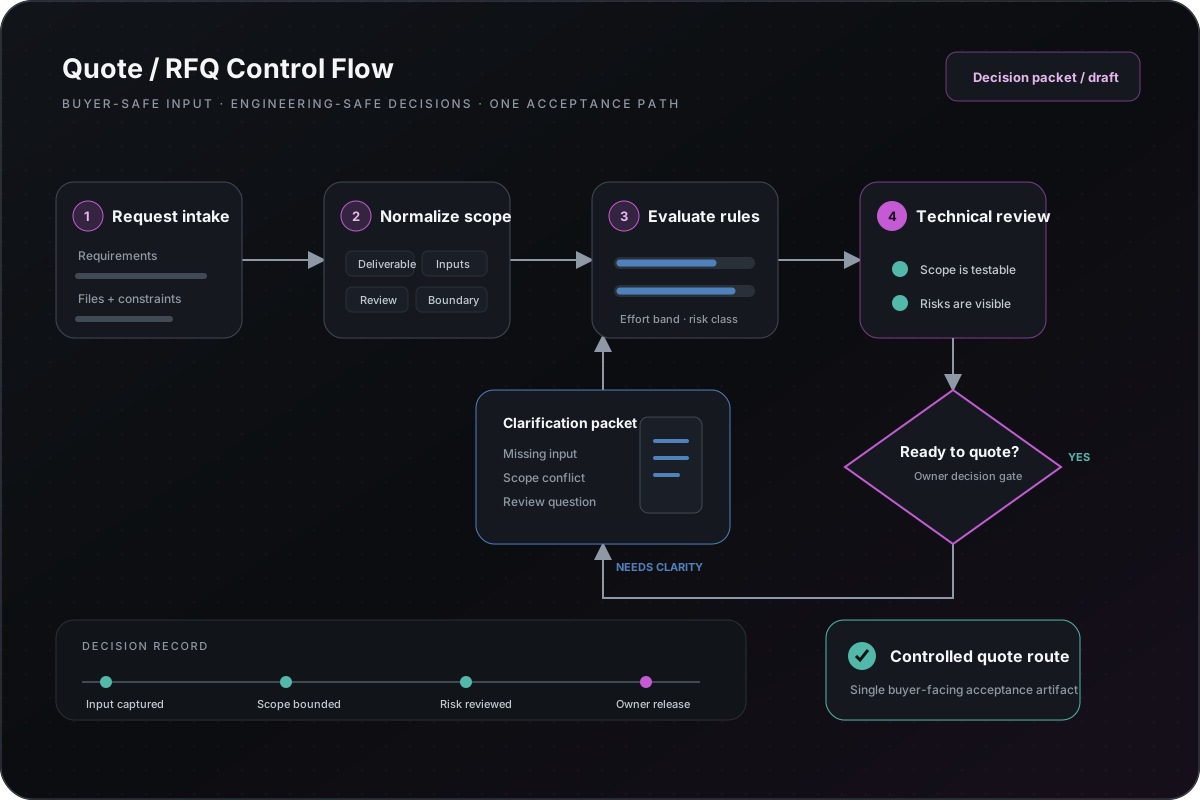
The commercial output remains traceable to request quality, engineering decisions, owned assumptions, and approval state.
Start with the current workflow, accepted output, connected systems, operational risk, and the first result worth implementing.
Review authorship, inputs, constraints, rules, outputs, integrations, validation, metrics, and source context in directly linkable technical sections.
Quote inputs, configuration choices, calculations, documents, and handoffs were useful but fragmented across Excel, files, email, and individual knowledge.
Shows how to preserve valuable spreadsheet logic while moving ownership into a governed system.
The commercial output remains traceable to request quality, engineering decisions, owned assumptions, and approval state.
Public-safe FryTools control-flow reconstruction — Prior employment at Fry Reglet · documented implementation. Derived from contemporaneous FryTools presentations and privately reviewed project inventories; it contains no employer records or product rules.
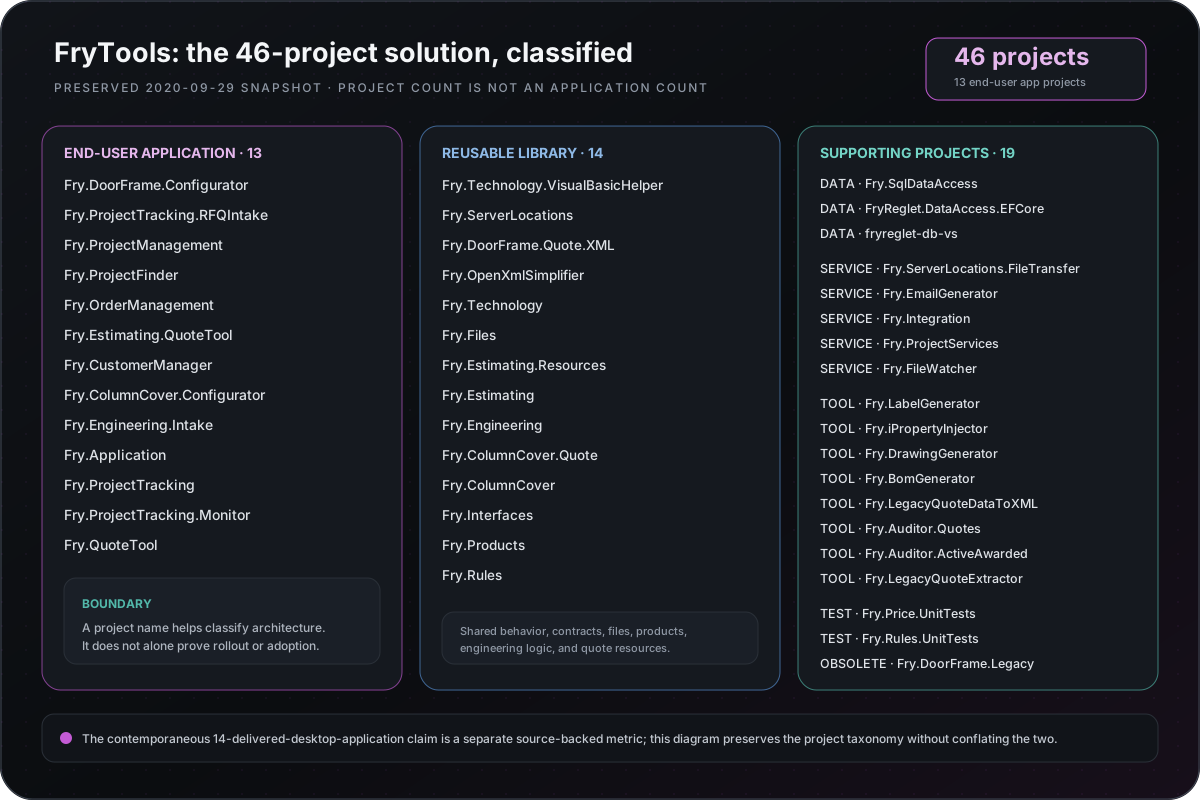
The preserved 46-project solution is classified project by project so an architecture count cannot be mistaken for a delivered-application count.
Exact 46-project FryTools architecture taxonomy — Prior employment at Fry Reglet · documented implementation. Derived from the classified 2020-09-29 solution snapshot; project classes remain separate from delivered-application counts.
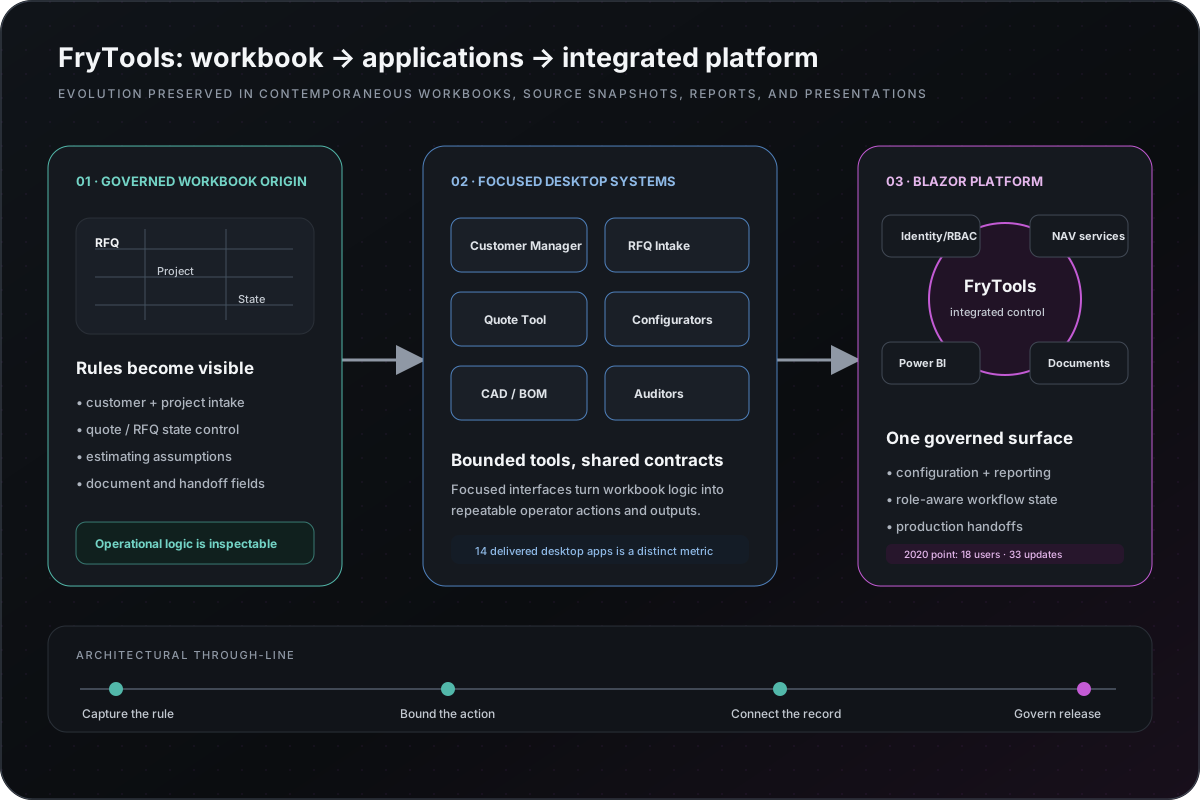
The lineage preserves the operating logic that moved from governed workbooks into focused applications and then an identity-aware integrated platform.
Workbook-to-desktop-to-Blazor lineage — Prior employment at Fry Reglet · documented implementation. Derived from dated workbook, application, architecture, and solution evidence.
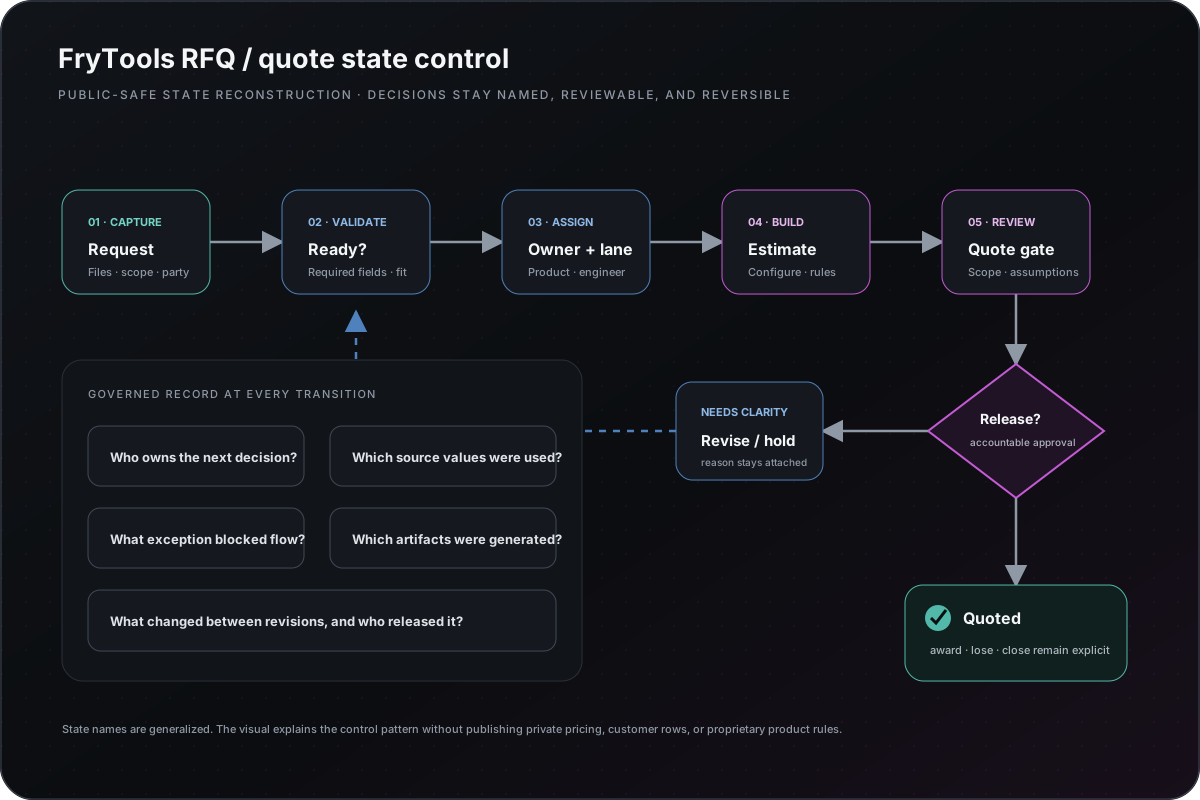
A public-safe state reconstruction shows how ownership, source values, exceptions, artifacts, and release decisions remain attached to each transition.
RFQ record and state-control flow — Prior employment at Fry Reglet · documented implementation. Derived from application-state documents and RFQ/project-tracking project evidence.
Customer/project context, correspondence, attachments, assignments, status, and lifecycle moved from disconnected inbox-and-folder work into typed records and state transitions.
Shows how request intake becomes a traceable operating record before quoting or engineering begins.
The commercial output remains traceable to request quality, engineering decisions, owned assumptions, and approval state.
Public-safe FryTools control-flow reconstruction — Prior employment at Fry Reglet · documented implementation. Derived from contemporaneous FryTools presentations and privately reviewed project inventories; it contains no employer records or product rules.
The preserved 46-project solution is classified project by project so an architecture count cannot be mistaken for a delivered-application count.
Exact 46-project FryTools architecture taxonomy — Prior employment at Fry Reglet · documented implementation. Derived from the classified 2020-09-29 solution snapshot; project classes remain separate from delivered-application counts.
The lineage preserves the operating logic that moved from governed workbooks into focused applications and then an identity-aware integrated platform.
Workbook-to-desktop-to-Blazor lineage — Prior employment at Fry Reglet · documented implementation. Derived from dated workbook, application, architecture, and solution evidence.
A public-safe state reconstruction shows how ownership, source values, exceptions, artifacts, and release decisions remain attached to each transition.
RFQ record and state-control flow — Prior employment at Fry Reglet · documented implementation. Derived from application-state documents and RFQ/project-tracking project evidence.
Quote headers, line items, hardware catalogs, BOM/labor rollups, fees, margin/markup views, and approvals became inspectable modules rather than hidden workbook cells.
Demonstrates how confidential commercial rules can be modularized without removing accountable pricing approval.
The commercial output remains traceable to request quality, engineering decisions, owned assumptions, and approval state.
Public-safe FryTools control-flow reconstruction — Prior employment at Fry Reglet · documented implementation. Derived from contemporaneous FryTools presentations and privately reviewed project inventories; it contains no employer records or product rules.
The preserved 46-project solution is classified project by project so an architecture count cannot be mistaken for a delivered-application count.
Exact 46-project FryTools architecture taxonomy — Prior employment at Fry Reglet · documented implementation. Derived from the classified 2020-09-29 solution snapshot; project classes remain separate from delivered-application counts.
The lineage preserves the operating logic that moved from governed workbooks into focused applications and then an identity-aware integrated platform.
Workbook-to-desktop-to-Blazor lineage — Prior employment at Fry Reglet · documented implementation. Derived from dated workbook, application, architecture, and solution evidence.
A public-safe state reconstruction shows how ownership, source values, exceptions, artifacts, and release decisions remain attached to each transition.
RFQ record and state-control flow — Prior employment at Fry Reglet · documented implementation. Derived from application-state documents and RFQ/project-tracking project evidence.
Project, engineering, production, document, vendor, task, and labor concerns were modeled as adjacent bounded modules rather than forced into the quote screen.
Shows why quote automation must define the post-award operating handoff instead of stopping at a PDF.
The commercial output remains traceable to request quality, engineering decisions, owned assumptions, and approval state.
Public-safe FryTools control-flow reconstruction — Prior employment at Fry Reglet · documented implementation. Derived from contemporaneous FryTools presentations and privately reviewed project inventories; it contains no employer records or product rules.
The preserved 46-project solution is classified project by project so an architecture count cannot be mistaken for a delivered-application count.
Exact 46-project FryTools architecture taxonomy — Prior employment at Fry Reglet · documented implementation. Derived from the classified 2020-09-29 solution snapshot; project classes remain separate from delivered-application counts.
The lineage preserves the operating logic that moved from governed workbooks into focused applications and then an identity-aware integrated platform.
Workbook-to-desktop-to-Blazor lineage — Prior employment at Fry Reglet · documented implementation. Derived from dated workbook, application, architecture, and solution evidence.
A public-safe state reconstruction shows how ownership, source values, exceptions, artifacts, and release decisions remain attached to each transition.
RFQ record and state-control flow — Prior employment at Fry Reglet · documented implementation. Derived from application-state documents and RFQ/project-tracking project evidence.
Private stakeholder materials were reduced to role, requirement, decision, implementation response, and outcome—without publishing names, email text, ratings, signatures, or protected commercial data.
Shows how stakeholder communication becomes a traceable implementation contract instead of disappearing into meetings and inboxes.
The commercial output remains traceable to request quality, engineering decisions, owned assumptions, and approval state.
Public-safe FryTools control-flow reconstruction — Prior employment at Fry Reglet · documented implementation. Derived from contemporaneous FryTools presentations and privately reviewed project inventories; it contains no employer records or product rules.
The lineage preserves the operating logic that moved from governed workbooks into focused applications and then an identity-aware integrated platform.
Workbook-to-desktop-to-Blazor lineage — Prior employment at Fry Reglet · documented implementation. Derived from dated workbook, application, architecture, and solution evidence.
A public-safe state reconstruction shows how ownership, source values, exceptions, artifacts, and release decisions remain attached to each transition.
RFQ record and state-control flow — Prior employment at Fry Reglet · documented implementation. Derived from application-state documents and RFQ/project-tracking project evidence.
Separate RFQ, quote, SQL, MongoDB, API, integration, and file-watcher components moved data through explicit boundaries into operational reporting.
Demonstrates integration as an owned reconciliation system rather than hidden data movement.
The commercial output remains traceable to request quality, engineering decisions, owned assumptions, and approval state.
Public-safe FryTools control-flow reconstruction — Prior employment at Fry Reglet · documented implementation. Derived from contemporaneous FryTools presentations and privately reviewed project inventories; it contains no employer records or product rules.
The preserved 46-project solution is classified project by project so an architecture count cannot be mistaken for a delivered-application count.
Exact 46-project FryTools architecture taxonomy — Prior employment at Fry Reglet · documented implementation. Derived from the classified 2020-09-29 solution snapshot; project classes remain separate from delivered-application counts.
The lineage preserves the operating logic that moved from governed workbooks into focused applications and then an identity-aware integrated platform.
Workbook-to-desktop-to-Blazor lineage — Prior employment at Fry Reglet · documented implementation. Derived from dated workbook, application, architecture, and solution evidence.
A public-safe state reconstruction shows how ownership, source values, exceptions, artifacts, and release decisions remain attached to each transition.
RFQ record and state-control flow — Prior employment at Fry Reglet · documented implementation. Derived from application-state documents and RFQ/project-tracking project evidence.
Legacy Quote Extractor, Active/Awarded and Quote auditors, Server Auditor, and file-location tools separated migration and operating assurance from normal user work.
Shows how legacy recovery can be measurable and reversible instead of a blind bulk conversion.
The commercial output remains traceable to request quality, engineering decisions, owned assumptions, and approval state.
Public-safe FryTools control-flow reconstruction — Prior employment at Fry Reglet · documented implementation. Derived from contemporaneous FryTools presentations and privately reviewed project inventories; it contains no employer records or product rules.
The preserved 46-project solution is classified project by project so an architecture count cannot be mistaken for a delivered-application count.
Exact 46-project FryTools architecture taxonomy — Prior employment at Fry Reglet · documented implementation. Derived from the classified 2020-09-29 solution snapshot; project classes remain separate from delivered-application counts.
The lineage preserves the operating logic that moved from governed workbooks into focused applications and then an identity-aware integrated platform.
Workbook-to-desktop-to-Blazor lineage — Prior employment at Fry Reglet · documented implementation. Derived from dated workbook, application, architecture, and solution evidence.
A public-safe state reconstruction shows how ownership, source values, exceptions, artifacts, and release decisions remain attached to each transition.
RFQ record and state-control flow — Prior employment at Fry Reglet · documented implementation. Derived from application-state documents and RFQ/project-tracking project evidence.
The solution included the Application shell and tests, InstallerMSIX, email, transaction, digital-resource, server-location, property-injection, calculation, product, and shared VB/.NET components.
Makes the difference between building tools and owning a maintainable application portfolio explicit.
The commercial output remains traceable to request quality, engineering decisions, owned assumptions, and approval state.
Public-safe FryTools control-flow reconstruction — Prior employment at Fry Reglet · documented implementation. Derived from contemporaneous FryTools presentations and privately reviewed project inventories; it contains no employer records or product rules.
The preserved 46-project solution is classified project by project so an architecture count cannot be mistaken for a delivered-application count.
Exact 46-project FryTools architecture taxonomy — Prior employment at Fry Reglet · documented implementation. Derived from the classified 2020-09-29 solution snapshot; project classes remain separate from delivered-application counts.
The lineage preserves the operating logic that moved from governed workbooks into focused applications and then an identity-aware integrated platform.
Workbook-to-desktop-to-Blazor lineage — Prior employment at Fry Reglet · documented implementation. Derived from dated workbook, application, architecture, and solution evidence.
A public-safe state reconstruction shows how ownership, source values, exceptions, artifacts, and release decisions remain attached to each transition.
RFQ record and state-control flow — Prior employment at Fry Reglet · documented implementation. Derived from application-state documents and RFQ/project-tracking project evidence.
The web transition did not erase the desktop portfolio; it put customer, RFQ, quote, configuration, project-service, reporting, and release concerns behind a more coherent application boundary.
Shows a real workbook-to-desktop-to-web evolution rather than a rewrite-first architecture story.
The commercial output remains traceable to request quality, engineering decisions, owned assumptions, and approval state.
Public-safe FryTools control-flow reconstruction — Prior employment at Fry Reglet · documented implementation. Derived from contemporaneous FryTools presentations and privately reviewed project inventories; it contains no employer records or product rules.
The preserved 46-project solution is classified project by project so an architecture count cannot be mistaken for a delivered-application count.
Exact 46-project FryTools architecture taxonomy — Prior employment at Fry Reglet · documented implementation. Derived from the classified 2020-09-29 solution snapshot; project classes remain separate from delivered-application counts.
The lineage preserves the operating logic that moved from governed workbooks into focused applications and then an identity-aware integrated platform.
Workbook-to-desktop-to-Blazor lineage — Prior employment at Fry Reglet · documented implementation. Derived from dated workbook, application, architecture, and solution evidence.
A public-safe state reconstruction shows how ownership, source values, exceptions, artifacts, and release decisions remain attached to each transition.
RFQ record and state-control flow — Prior employment at Fry Reglet · documented implementation. Derived from application-state documents and RFQ/project-tracking project evidence.
14 delivered desktop applications — Contemporaneous résumé count; deliberately separate from Visual Studio project and archive-directory counts.
Prior employment at Fry Reglet · documented implementation. 2021 résumé cross-checked against a private application-directory inventory.
44–46 projects in preserved solution snapshots — Direct solution-file count across three dated snapshots; includes apps, services, libraries, data layers, tests, and deployment/support projects.
Prior employment at Fry Reglet · documented implementation. Private solution files parsed project-by-project and summarized without source publication.
Prior employment at Fry Reglet · documented implementation. 2019 role description and 2020 FryTools architecture/MVP presentations.
18 users at the documented 2020 rollout point — Dated point-in-time figure paired with 33 recorded automatic updates; not a lifetime or current count.
33 automatic updates at the documented 2020 rollout point — Dated point-in-time figure paired with 18 users; not a current release count.
Prior employment at Fry Reglet · documented implementation. Date-qualified figures from the directly reviewed 2020 sustainability presentation.
892 RFQ request records in the documented web-log snapshot — Contemporaneous deck count since April 13, 2020 at that snapshot; not customers, awards, or lifetime quote volume.
Prior employment at Fry Reglet · documented implementation. Directly reviewed 24-page Quote Tool C-level overview.
Prior employment at Fry Reglet · documented implementation. Role-level requirements summarized from private stakeholder materials; no names, ratings, signatures, or quotations are published.
Prior employment at Fry Reglet · documented implementation. 2018 public demo portfolio
Publication limit: No employer source code, drawings, title blocks, product rules, pricing, customer records, credentials, internal paths, or protected production artifacts are published.
Prior employment at Fry Reglet · documented implementation. 2019 Operations Technology Specialist role correspondence
Publication limit: No employer source code, drawings, title blocks, product rules, pricing, customer records, credentials, internal paths, or protected production artifacts are published.
Prior employment at Fry Reglet · documented implementation. 2020 FryTools planning and sustainability presentations
Publication limit: No employer source code, drawings, title blocks, product rules, pricing, customer records, credentials, internal paths, or protected production artifacts are published.
Prior employment at Fry Reglet · documented implementation. 2021 contemporaneous résumé
Publication limit: No employer source code, drawings, title blocks, product rules, pricing, customer records, credentials, internal paths, or protected production artifacts are published.
Prior employment at Fry Reglet · documented implementation. private application-archive inventory
Publication limit: No employer source code, drawings, title blocks, product rules, pricing, customer records, credentials, internal paths, or protected production artifacts are published.
Start with the users, current workflow, accepted output, failure mode, connected systems, and the first implementation decision.