AI-assisted engineering
AI Skills Inventor and Vault Developers Need Now
Maps AI skills to real Autodesk work so developers can use models for planning, code review, documentation, diagnostics, and safer handoff.
Decision brief
Use this article as a routing artifact, not passive content.
Read time
6 min
Updated
May 30, 2026
Route
AI-assisted engineering
Why it matters
Maps AI skills to real Autodesk work so developers can use models for planning, code review, documentation, diagnostics, and safer handoff. The useful signal is the operating judgment behind the topic: scope, data boundaries, proof, UAT, and handoff.
Best lens
Read it through Autodesk Inventor, Autodesk Vault, Autodesk API and decide which service, proof artifact, or leadership conversation it supports.
Next action
Turn add-ins, Vault data, drawing packages, content libraries, and release workflows into managed delivery.
Modernize CAD systemsContentsJump sections
Evaluation note
Maps AI skills to real Autodesk work so developers can use models for planning, code review, documentation, diagnostics, and safer handoff. Use it as a practical routing note: what problem is being described, what infrastructure is required, what guardrails matter, and what proof a buyer or hiring manager should ask to see.
CAD Guardian field context
This article is about practical AI fluency for Autodesk developers. The useful skill is not prompt theater; it is knowing how to give the model context, constrain the task, verify the output, and protect client data.
- Usefulness: turns scattered expertise into reusable decisions, plans, checklists, code reviews, media, and evidence without removing human accountability.
- Infrastructure: clear prompts, source boundaries, approved tools, private-data rules, model selection, review loops, and artifact-based validation.
- Guardrails: least-privilege access, private-data minimization, approved AI-use boundaries, test data, UAT, runtime proof, and written acceptance criteria.
- Who benefits: lean engineering teams, CAD automation developers, technical peers, operators, and buyers trying to understand what AI systems are doing.
The CAD Guardian Playbook for SMB, Mid-Market, and Enterprise Engineering Teams
Autodesk automation is entering a new era.
The strongest Inventor and Vault teams will combine CAD platform skill with AI disciplines that improve planning, diagnostics, documentation, testing, and review without weakening engineering control.
This is the CAD Guardian operating lens.
High-leverage skills matter most when they are tied to real workflow outcomes.
The goal is practical adoption, not tool-chasing.
Each one grounded in real Inventor/Vault automation work.
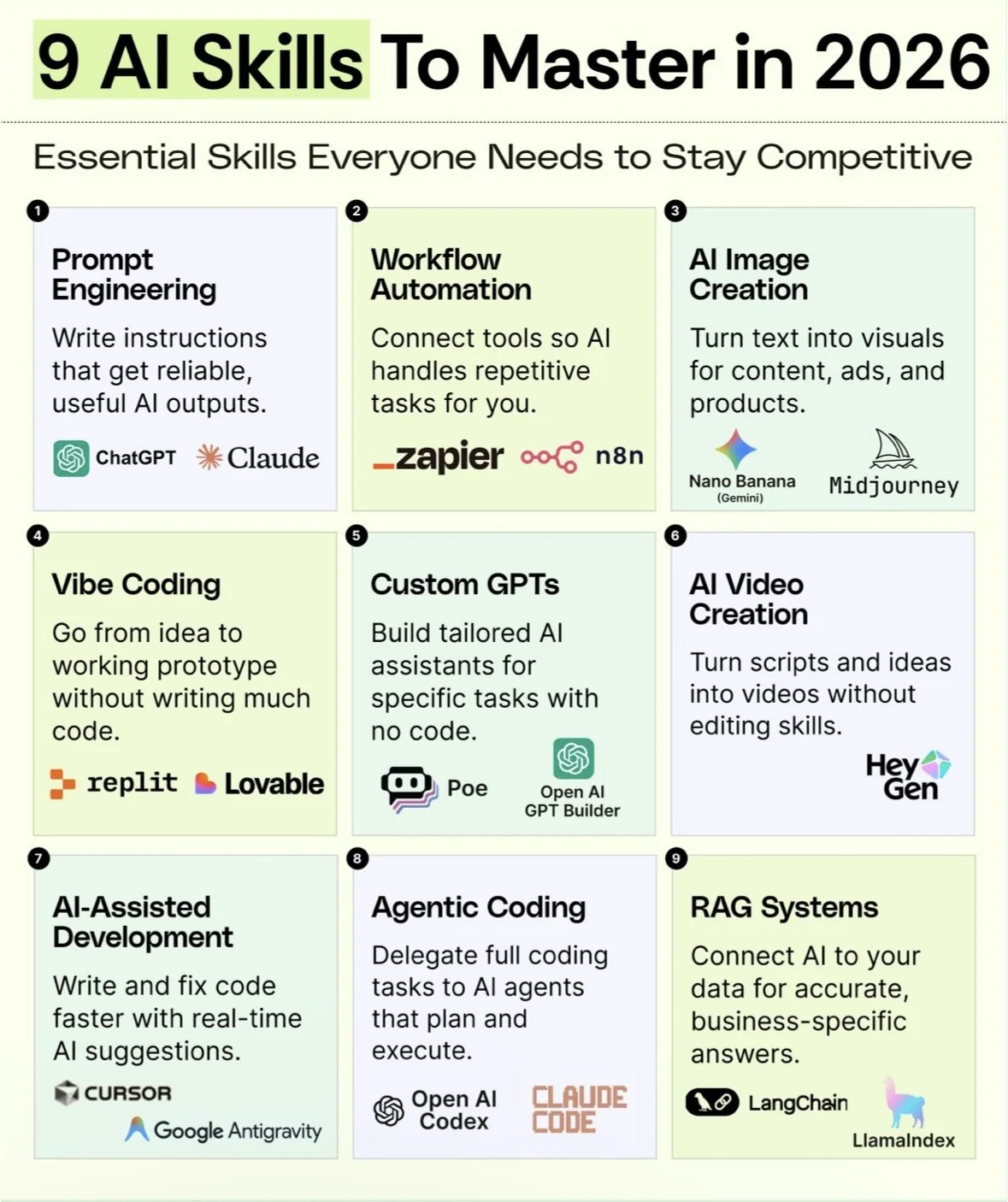
1. Prompt Engineering
AI becomes useful only when the instructions are engineered, not typed.
For Inventor and Vault developers, prompt engineering is becoming a core skill because useful output depends on context: host version, API boundary, transaction rules, Vault lifecycle, UI constraints, and acceptance checks.
Platforms
ChatGPT
Claude
Strengths
• Speeds up complex Inventor COM-safe code scaffolding
• Converts legacy VBA/iLogic into clean .NET 8
• Documents undocumented add-ins and Vault custom entities
• Creates search-optimized summaries of massive Inventor projects
Limitations
• Must be version-pinned: Inventor 2023 API ≠ Inventor 2025 API
• Hallucinates unsupported Vault endpoints when not guided
• Requires precise patterns for controlling document references and memory release
2. Workflow Automation
Engineering automation does not end inside Inventor.
Your tooling must live inside a connected ecosystem: notifications, approvals, metadata sync, file delivery, and downstream review cycles.
Platforms
Zapier
n8n
Strengths
• Handles non-CAD orchestration such as approvals, tickets, and file routing
• Integrates Vault events with Teams/Slack for lifecycle feedback
• Automates notifications after Job Processor completes complex tasks
Limitations
• Not suitable for opening Inventor files or resolving dependencies
• Cloud tools must pass engineering security, IP, and compliance constraints
• Cannot replace internal pipelines involving large assemblies or COM automation
3. AI Image Creation
Not for drawings—for communication.
Engineering leaders, clients, and technicians understand concepts faster through visuals.
Platforms
Nano Banana (Gemini)
Midjourney
Strengths
• Creates clean diagrams for Inventor automation flows
• Generates UI concepts for WPF tools, ribbons, palettes, and dashboards
• Enhances training and onboarding materials for Vault and Job Processor
Limitations
• Cannot generate technical drawings or Inventor-ready geometry
• Requires strict governance to avoid exposing customer work
4. Vibe Coding
Rapid prototyping for engineering tools before you commit to full WPF or Inventor add-in architecture.
Platforms
Replit
Lovable
Strengths
• Accelerates UI layout exploration before writing XAML
• Useful for mocking out HTTP endpoints or service layers for Vault data
• Allows fast conceptual prototyping of internal dashboards
Limitations
• Not adequate for handling Inventor transactions, property sets, or Vault authentication
• Cannot support real-world engineering data scales
5. Custom GPTs
Internal AI systems trained on your standards, your codebases, your lifecycle rules.
Platforms
Poe
OpenAI GPT Builder
Strengths
• Becomes an internal “Inventor/Vault Specialist” available 24/7
• Supports junior developers by enforcing your coding standards
• Helps explain custom Vault workflows, schemas, and entity definitions
• Reduces onboarding time and stabilizes distributed teams
Limitations
• Must not ingest engineering drawings or sensitive customer IP
• Requires curated training data for production-level reliability
6. AI Video Creation
Your internal knowledge needs a visual channel.
Video accelerates adoption, training, and compliance across multi-site engineering groups.
Platforms
HeyGen
Strengths
• Creates consistent, professional training on Inventor workflows
• Useful for documenting new WPF or Job Processor capabilities
• Scales onboarding across global teams
Limitations
• Not suited for highly detailed step-by-step modeling sequences
• Should not replace recorded screen walkthroughs for complex geometry tasks
7. AI-Assisted Development
Where AI meets real engineering.
This is the multiplier for Inventor and Vault automation teams.
Platforms
Cursor
Google Antigravity
Strengths
• Writes .NET 8–compatible Inventor add-ins and WPF/MVVM tooling
• Refactors monolithic legacy add-ins into clean modular structures
• Helps manage event wiring, document lifecycles, and custom metadata logic
• Accelerates Vault plugin creation, including custom commands and search panels
Limitations
• Still requires expert review for COM stability and disposal patterns
• Cannot infer constraints, adaptivity rules, or iAssembly logic on its own
8. Agentic Coding
Autonomous AI agents writing entire modules, pipelines, or job processors.
Platforms
OpenAI Codex
Claude Code
Strengths
• Generates full Vault job workflows including metadata extraction
• Creates multi-window WPF tools with consistent MVVM structure
• Builds scaffolding for Inventor automation services (file open, resolve, transform)
Limitations
• Must be sandboxed—autonomous agents can generate destructive Vault code
• Should never be allowed to run production file operations without validation
• Requires a human architect to guide constraints and guardrails
9. RAG Systems
The breakthrough AI capability for engineering organizations.
RAG turns your standards, manuals, C# snippets, Vault architecture diagrams, and API references into a private, searchable intelligence system.
Platforms
LangChain
LlamaIndex
Strengths
• Allows natural-language queries against engineering standards
• Creates internal assistants that “know” Inventor, Vault, lifecycle rules, naming, and logic
• Converts thousands of pages of engineering procedures into actionable guidance
• Reduces onboarding time for new engineers and offshore teams
Limitations
• Requires secure storage and strict separation from production data
• Embedding quality determines system accuracy
• Needs governance to prevent leakage of proprietary engineering processes
Closing Perspective
The next generation of Inventor and Vault leaders will be defined by how well they combine API knowledge, engineering context, AI assistance, testing, documentation, and delivery evidence.
This is the CAD Guardian advantage:
• Faster delivery.
• Higher reliability.
• Reduced engineering drag.
• Systems that scale from SMB to the Fortune 500.
• A disciplined, secure, repeatable AI framework for Autodesk automation.
These nine skills are the modern toolkit.
Teams who adopt them will outpace the industry.
Teams who ignore them will fall behind.
How to use this article
Use this as a working lens for AI-assisted engineering workflows, intent capture, and tool-using delivery systems. If the problem is a software leadership evaluation, route it through TSmithCode proof. If the problem is a scoped automation, CAD platform, data, or delivery engagement, route it through CAD Guardian so the first phase has clear boundaries, acceptance evidence, and a handoff path.
Migrated image archive