Article
Mar 21, 2026
Technical to Leadership Career Map for CAD and Engineering Professionals
A practical guide for technical professionals moving into leadership using LinkedIn Learning’s 11-course program management path—translated for CAD, Autodesk, AEC, manufacturing, and engineering delivery leaders.
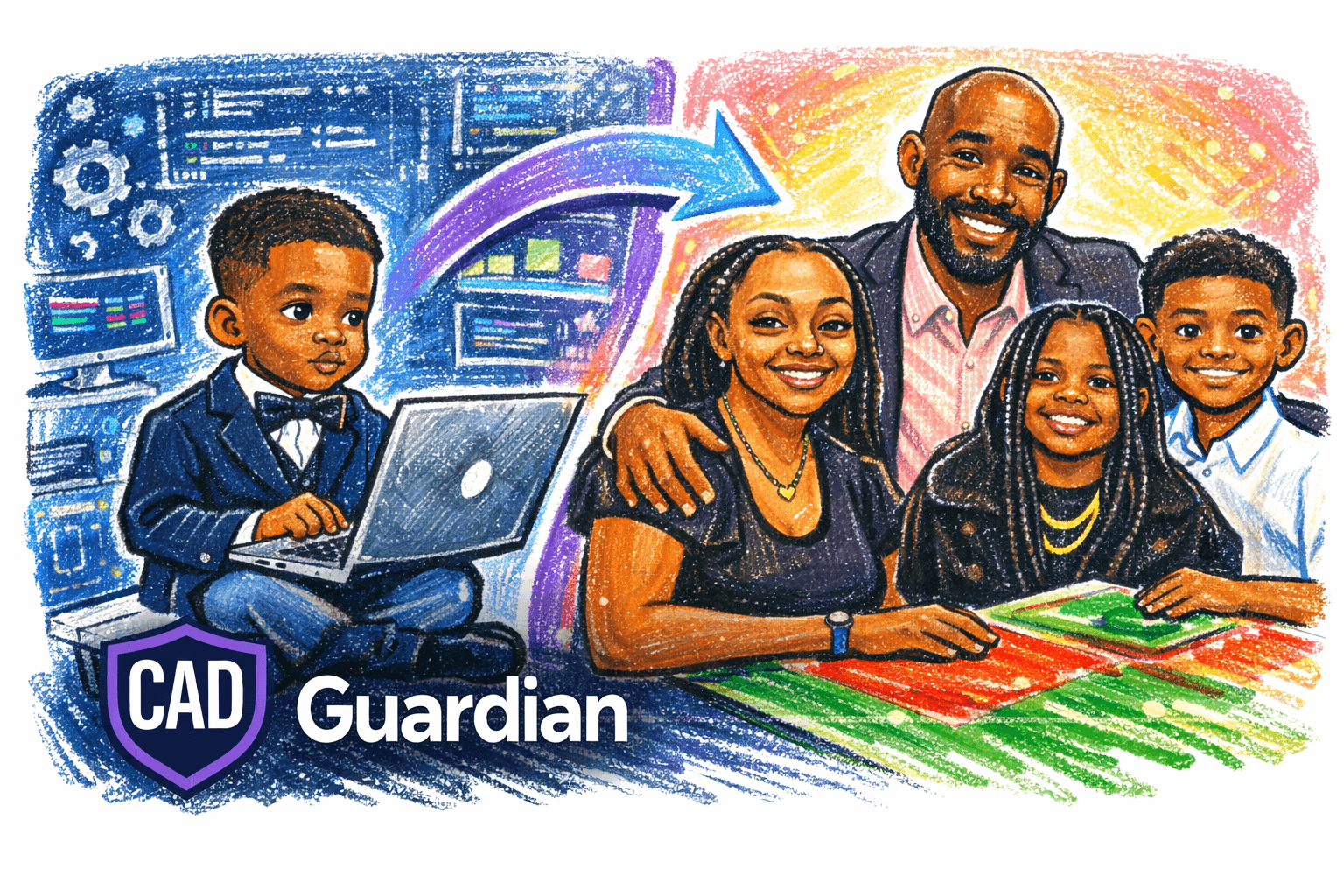
From Technical Expert to Program-Level Leader
A Practical 11-Course Map for CAD, Autodesk, AEC, and Engineering Professionals Moving Into Leadership
Technical depth gets you trusted. Cross-functional leadership gets you scaled.
That is the shift.
For many CAD, Autodesk, engineering systems, and software professionals, the next career ceiling is not technical skill. It is the ability to align people, priorities, risk, resources, and outcomes across the business.
That is why this LinkedIn Learning path matters.
Develop Your Skills as a Program Manager is not just a certificate path. It is a structured transition map for technical professionals who are moving from specialist work into broader leadership, advisory, and delivery ownership.
Why This Path Matters to the CAD Guardian Audience
If you work in any of the following areas, this path is directly relevant:
CAD automation
Autodesk Inventor or Vault administration
BIM, PLM, or engineering systems
Solution architecture
Digital transformation
Manufacturing systems
AEC coordination
Cross-functional technical consulting
Many people in these roles are already doing partial leadership work without naming it correctly.
You may already be:
translating technical constraints for business stakeholders
coordinating vendors and internal teams
defending scope and timelines
managing adoption risk
driving standards across departments
aligning implementation work to business goals
That is the edge of program-level work.
The Real Career Shift
The shift is not:
technical -> non-technical
The shift is:
individual execution -> organizational leverage
That means moving from:
building the solution
to aligning the solution
to defending the roadmap
to coordinating multiple workstreams
to leading outcomes through other people
The Simplest Possible Version
What Changes at Each Stage
Stage | Primary Value | Main Question |
|---|---|---|
Specialist | Technical output | Can I build it? |
Technical Lead | Technical direction | Can I guide it? |
Cross-Functional Leader | Alignment | Can I align people around it? |
Program Leader | Outcome orchestration | Can I deliver it across teams, constraints, and priorities? |
The Learning Path at a Glance
Learning Path
Develop Your Skills as a Program Manager
Scope
11 hours of content
11 learning items
Core Promise
build program management skill
develop technical know-how relevant to the role
improve leadership and communication capability
The 11-Course Map to Success
1. What Is Program Management?
16 minutes | Claudine Peet
This course matters because it resets the frame.
Many technical professionals think in terms of:
tickets
deliverables
bugs
models
code
tasks
files
Program management forces you to think in terms of:
business outcomes
dependencies
governance
stakeholder groups
sequencing
delivery systems
measurable impact
Why It Matters for Technical Professionals
If you automate CAD workflows, improve Autodesk Vault governance, integrate systems, or lead engineering transformation work, you cannot stay at the task level forever.
You need to understand the difference between:
a project
a cluster of related projects
and a program that delivers long-term business value
CAD Guardian Translation
A script is not a program.
An add-in is not a program.
A dashboard is not a program.
But this is a program:
CAD standardization
Vault workflow redesign
training and adoption
release governance
automation rollout
reporting and KPI visibility
executive alignment
That is program territory.
2. Program Management Foundations
1 hour 21 minutes | Claudine Peet
This is the operating backbone of the entire path.
It gives technical professionals the language and structure to manage larger bodies of work without getting trapped in execution details.
Why It Matters
This course helps you think beyond “getting it done” and toward:
program phases
transitions
governance
milestones
closeout
continuity
Why This Is So Important in Technical Environments
Technical people often build something useful and stop there.
But senior leadership usually cares about:
how it rolls out
how it is governed
how it is adopted
how it transitions to steady-state use
how it closes or evolves
Core Lesson
A strong technical solution without program structure often creates fragile results.
3. Leadership Foundations
2 hours 5 minutes | Dr. Shirley Davis
This course matters because technical credibility is not enough in larger rooms.
At a certain level, you are no longer judged only by technical precision. You are judged by:
confidence
clarity
agility
composure
judgment
influence
Why It Matters for the Transition Into Leadership
A technical professional can be right and still fail to move the room.
Leadership begins when you can:
create direction under ambiguity
keep people aligned under pressure
communicate with authority
maintain trust across different audiences
Career Signal
This course is especially important for professionals who want to move into:
solution architecture
technical program leadership
enterprise advisory
digital transformation leadership
consulting leadership roles
4. Communication within Teams (2021)
44 minutes | Daisy Lovelace
This course matters because many “technical problems” are actually communication failures in disguise.
Typical Failure Points
unclear ownership
vague requirements
misread assumptions
no shared decision record
technical language that never lands with business stakeholders
meetings that end without a clear next action
Why It Matters
Senior technical professionals need to become fluent in multiple communication layers:
executive language
implementation language
stakeholder language
user language
That does not mean becoming vague.
It means becoming more precise for each audience.
Practical Insight
The higher you go, the more expensive unclear communication becomes.
5. Essentials of Team Collaboration
32 minutes | Dana Brownlee
This course matters because collaboration is not soft. It is operational.
Technical initiatives fail when different groups optimize for different things and no one reconciles the conflict.
Example
engineering wants capability
IT wants control
operations wants continuity
leadership wants ROI
users want simplicity
vendors want clear scope
Why It Matters
A cross-functional leader must make these competing forces visible and manageable.
That is what collaboration looks like at a senior level.
CAD Guardian Translation
If you are leading across Autodesk, CAD, engineering, IT, and operations, collaboration is not “team spirit.” It is constraint management across functions.
6. Negotiation Foundations
1 hour 5 minutes | Lisa Gates
This course matters because technical professionals negotiate constantly, even when they do not realize it.
What You Are Actually Negotiating
scope vs timeline
quality vs speed
governance vs flexibility
customization vs maintainability
implementation effort vs business demand
central control vs local team preferences
Why It Matters
Most struggling technical leaders do not lack intelligence. They lack structured negotiation skill.
That creates:
overcommitment
rework
misaligned expectations
quiet resentment
unstable delivery
Strong Leadership Move
A senior leader does not simply say yes or no.
They frame tradeoffs, present options, and guide decisions.
7. Project Manager to Project Motivator: Unlock the Secrets of Strengths-Based Project Management
48 minutes | Ruth Pearce
This course matters because leadership is not only coordination. It is activation.
Many technical professionals assume good logic should be enough to move people. It is not.
People also need:
clarity
confidence
recognition
ownership
momentum
belief in the direction
Why It Matters
As your role becomes broader, you cannot rely on direct control. You need influence.
That means learning how to motivate different people with different strengths and working styles.
CAD Guardian Translation
The next level is not just:
assigning tasks
setting standards
correcting errors
It is also:
creating buy-in
reducing friction
increasing energy
building confidence in the change
8. Managing Resources Across Project Teams
1 hour 22 minutes | Chris Croft
This course matters because resource constraints are where many strong plans break.
This Is the Real Situation in Most Organizations
the same key SME is needed by multiple initiatives
the same admin group supports several teams
the same technical lead becomes a bottleneck
the same rollout window is overloaded
leadership thinks all priorities are urgent
Why It Matters
A strong technical architect who understands resource planning becomes far more credible.
Because leadership does not only care whether something is technically possible. They care whether it is realistically supportable.
Core Insight
Architecture without capacity awareness is incomplete.
9. Project Management: International Projects
1 hour | Sam Yankelevitch
This course matters because modern technical work is rarely confined to one team, one office, or one mindset.
Even if your work is not formally international, it may still span:
distributed teams
vendors
remote collaborators
time zones
different communication norms
different escalation styles
Why It Matters
Senior leaders must learn to operate across differences without letting execution quality collapse.
Real Leadership Signal
The technical professional who can only lead people who think like them is limited.
The leader who can bridge different disciplines, cultures, and operating styles becomes far more valuable.
10. Creating a Program Strategy
45 minutes | Claudine Peet
This is one of the most important courses in the path.
Why? Because many technical people can explain the implementation but not the strategic case.
This Course Helps You Answer
why this initiative exists
what business objective it supports
what operating model it changes
how success will be measured
how the work fits into a bigger roadmap
Why It Matters
This is the move from:
feature thinking
to system thinking
to business-aligned leadership
CAD Guardian Translation
If you build CAD automation, Vault governance, release workflows, dashboards, or enterprise integrations, you need to go beyond what the tool does and explain what the program changes.
That is where larger roles open up.
11. Project Resource Management
1 hour 3 minutes | Claudine Peet
This course reinforces one of the biggest trust signals in leadership: resource judgment.
Why It Matters
Executives notice quickly who understands:
what roles are needed
when they are needed
where bottlenecks will appear
how effort changes over time
what dependencies affect utilization
Why This Is Important for Technical Leaders
A senior technical leader cannot only describe the solution. They must also describe the staffing reality around the solution.
That is leadership language.
The Career Map Hidden Inside This Learning Path
The Shape of the Path
Another Way to See It
Why This Matters for CAD, Autodesk, and Engineering Professionals
If You Are in CAD
You may already be doing leadership-adjacent work when you:
drive standards
coordinate drawing governance
manage revision flow
align engineering and manufacturing
support release decisions
If You Are in Autodesk, Vault, BIM, or PLM
You are already close to program-level work because your role sits at the intersection of:
tools
data
process
adoption
governance
business continuity
If You Are a Developer
This path helps you move from:
the person who built it
tothe person who aligned it, defended it, and delivered it across the business
That jump is massive.
Common Blind Spots for Technical Professionals Moving Into Leadership
1. Confusing expertise with influence
Being right is valuable.
Getting alignment is what scales results.
2. Staying too deep in implementation detail
Senior stakeholders often need:
objective
risk
dependencies
tradeoffs
timeline
ownership
before they need technical depth.
3. Ignoring motivation
People do not sustain change just because the plan is technically correct.
4. Treating communication as optional polish
Communication is part of delivery.
5. Overlooking resource planning
A strong initiative without realistic capacity planning becomes fragile quickly.
How to Use This Learning Path Strategically
Do not just finish the courses. Convert them into leverage.
After Each Course, Write Down Four Things
Question | What to capture |
|---|---|
What did I learn? | The core principle |
Where am I weak? | Your current gap |
Where does this apply? | A real initiative or role |
How does this strengthen my positioning? | Resume, interview, leadership story |
Best Practice
After each course, write:
one sentence you could use in a stakeholder meeting
one change you need to make in your behavior
one project where this applies immediately
one resume or LinkedIn angle it sharpens
That is how a course becomes career capital.
A Clean Success Map for the Intended Audience
If You Are Highly Technical and Want to Lead More
This path helps you become better at:
stakeholder management
cross-functional advisory
strategic communication
program-level thinking
negotiation
resourcing
leadership presence
If You Are Already Leading Small Initiatives
This path helps you become better at:
scaling beyond one team
aligning multiple workstreams
reducing delivery friction
improving business readability
increasing trust with decision-makers
If You Want Better Roles, Better Scope, and Better Compensation
This path helps you present yourself as:
more than a builder
more than a subject matter expert
more than a technical executor
It helps position you as a leader who can move complexity through organizations.
What Recruiters and Hiring Managers Actually See
When this kind of learning path is paired with a strong technical resume, it signals:
range
maturity
cross-functional readiness
strategic ambition
executive-facing growth
leadership intent
For a technical professional, that is powerful because it says:
I can still build. But now I can also align, influence, and deliver through others.
Final Takeaway
This learning path is valuable because it addresses the exact gap many technical professionals hit when they are ready for bigger roles.
The gap is not talent.
The gap is cross-functional leadership capacity.
If you work in CAD, Autodesk, engineering systems, software, AEC, manufacturing, or enterprise delivery, this 11-course map is a strong framework for moving from specialist to orchestrator.
The Bottom Line
CAD Guardian Perspective
The future belongs to technical professionals who can do both:
understand the system deeply
and move the organization around the system effectively
That is the real upgrade.
Ok I'm calling you out enough reading! Time for action…
Best Mindset Reset
What Is Program Management?
Best for understanding the difference between delivering tasks and orchestrating outcomes.
Best for Leadership Presence
Leadership Foundations
Best for technical professionals who need stronger executive-facing confidence.
Most Underrated
Negotiation Foundations
Best for people who keep absorbing misaligned expectations without structuring tradeoffs.
Best for Real-World Pain
Managing Resources Across Project Teams
Best for professionals dealing with bottlenecks, overloaded SMEs, and competing priorities.
Best Strategic Upgrade
Creating a Program Strategy
Best for turning technical work into business-aligned leadership narrative.
Call To Action
If you are a CAD, Autodesk, engineering, or technical professional moving into leadership, this is the transition worth taking seriously.
Not because it makes you less technical.
Because it makes your technical value travel farther.
Follow CAD Guardian for more practical breakdowns on technical leadership, Autodesk strategy, engineering systems, and cross-functional execution.