AI Product Delivery
Mar 22, 2026
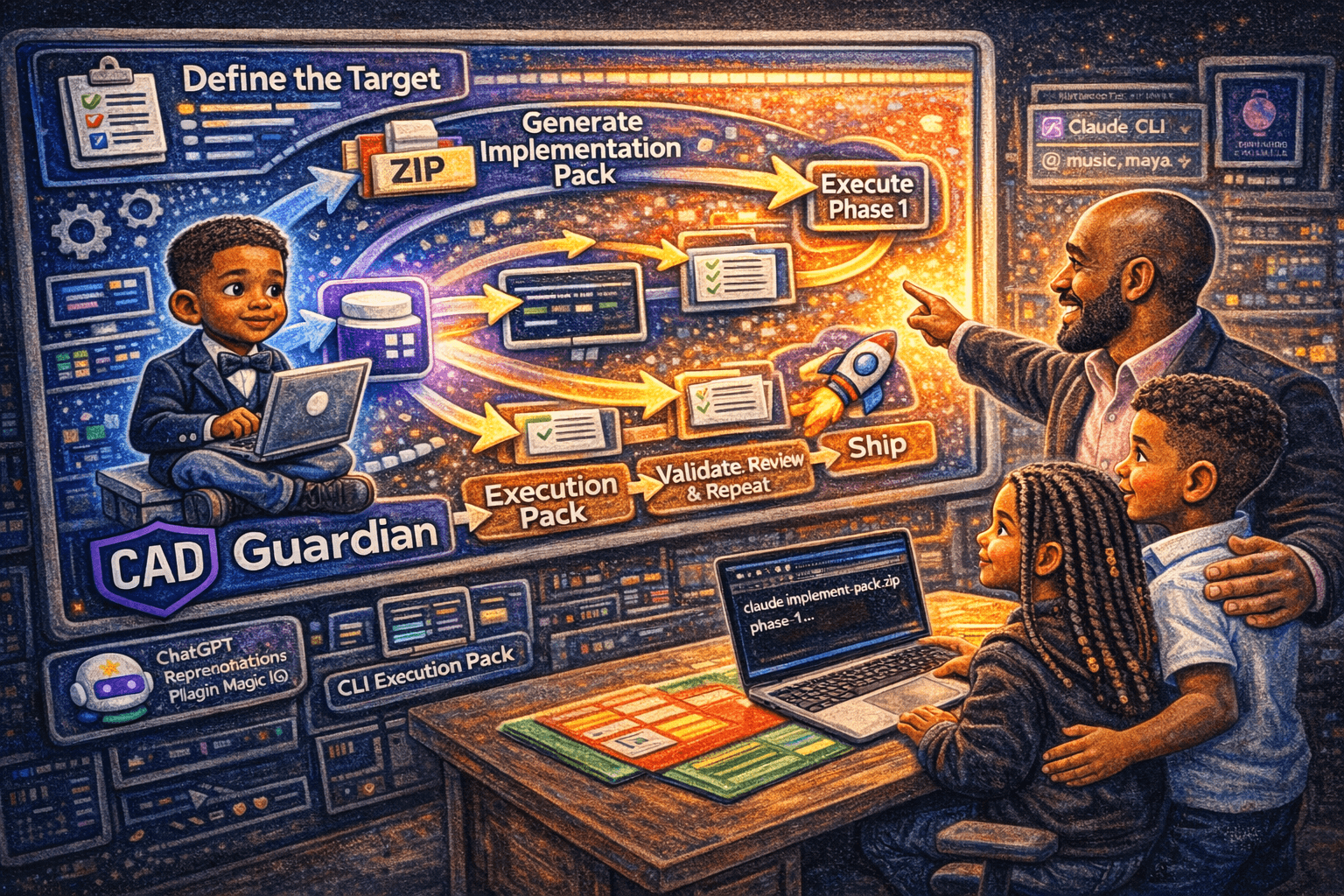
AI Product Kickoff System for Governed, AI-Assisted Delivery
This is the reusable kickoff system I use to move from idea to governed, AI-assisted product delivery with less drift, clearer phase control, and stronger validation.
AI Product Kickoff System for Governed, AI-Assisted Delivery
Who this is for
This is for builders who no longer want to start projects with:
“Build the app.”
It is for people who want a repeatable system for:
full product creation
phase control
AI-assisted implementation
governance across the lifecycle
validation before ship
That includes:
program managers
product leaders
technical founders
software architects
lead developers
implementation consultants
Core idea
Most AI-assisted projects break in one of three places:
Scope drift
The AI starts in one direction and finishes in another.Governance failure
Nobody owns dependencies, review gates, escalation, or benefit tracking.Validation failure
Teams confuse “generated” with “done.”
The fix is to start with a governed kickoff system, not a coding request.
That means every project begins with:
target state
non-goals
phase boundaries
implementation artifacts
validation rules
rollback expectations
branch and session discipline
release evidence
What I am accountable for
When I use this system, I am not acting like “the person telling AI what to do.”
I am acting as the accountable owner of:
outcomes
scope
governance
dependencies
validation
change control
release readiness
In practice, that means I own:
Outcome control
business goal
user outcome
project success criteria
Benefit control
what value the project should create
which phase unlocks which value
whether execution is still aligned
Stakeholder control
sponsor
approver
technical owner
review cadence
escalation path
Change control
what can change now
what must wait
what is drift
what triggers re-planning
Delivery control
phase gates
validation standards
evidence of completion
ship approval
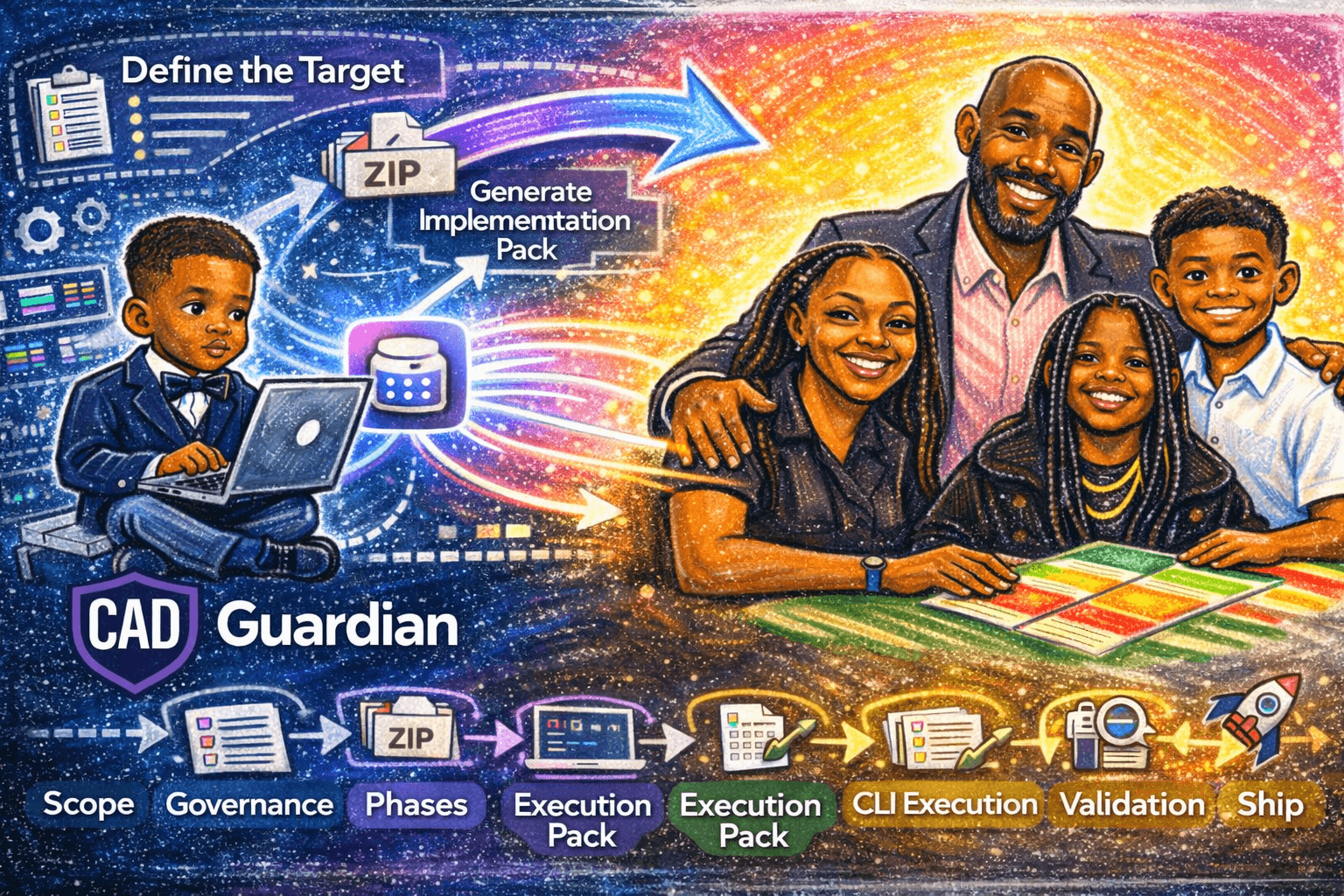
The kickoff system
Every project starts the same way.
Step 1: Define the control surface
Before any build work starts, fill in:
Project name
Product thesis
Primary user
Primary business outcome
Success criteria
Non-goals
Constraints
Known dependencies
Primary risks
Decision-maker
Release target
Preferred AI surface
Required validation
This becomes the control layer for the entire lifecycle.
Step 2: Generate the implementation pack
The AI should create a zip or folder with:
00_MASTER_PLAN.md01_PHASE_1_[NAME].md02_PHASE_2_[NAME].md03_PHASE_3_[NAME].md04_PHASE_4_[NAME].md05_PHASE_5_[NAME].md06_PHASE_6_[NAME].md07_EXECUTION_MANIFEST.[json|yaml]08_[AI_TOOL]_PROMPTS.md09_SHIP_CHECKLIST.md
Step 3: Load the pack into the repo
Put the pack inside the repo so the AI can use current codebase context and phase instructions together.
Step 4: Execute one phase at a time
Each phase gets:
one branch
one AI session
one objective
one validation loop
one review gate
Step 5: Validate and close
No phase advances without:
files changed
commands run
validation results
unresolved issues
rollback notes
recommended commit message
Implementation pack standard
00_MASTER_PLAN.md
Must include:
project objective
target user
business reason
success criteria
non-goals
architecture boundaries
phase order
definition of done
ship criteria
01–06_PHASE_*.md
Each phase file must include:
exact objective
what changes in this phase
what must not change
files/folders likely affected
validation commands
acceptance criteria
risk notes
rollback notes
dependency notes
07_EXECUTION_MANIFEST.[json|yaml]
Should include:
phase order
branch naming convention
per-phase tasks
command blocks
validation blocks
expected outputs
08_[AI_TOOL]_PROMPTS.md
Should include:
planning prompt
execution prompt
validation prompt
review prompt
ship-readiness prompt
09_SHIP_CHECKLIST.md
Should include:
environment verification
build
type check
tests
deployment
analytics
monitoring
rollback
stakeholder signoff
release notes
Terminal-first execution standard
I recommend terminal-first execution because it is easier to inspect, easier to diff, and easier to govern.
Required AI behavior
The AI must:
read the master plan
read the current phase file
summarize scope
stop before editing
wait for approval
execute only the current phase
run validation
summarize evidence
stop
Prohibited AI behavior
The AI must not:
start later phases
opportunistically rewrite unrelated files
silently redefine the product
skip validation
push changes automatically
read secrets without permission
bypass approval gates
Required human review
Before commit, review:
git statusgit diff --statgit diffvalidation output
unresolved issues
Reusable kickoff template
Copy this into a fresh document for every new project.
What makes this stronger than normal prompting
Most AI workflows start too late.
They start with:
“Build X.”
This system starts higher:
“What is the governed path from target state to validated delivery?”
That improves:
clarity
reuse
portfolio consistency
stakeholder trust
implementation quality
auditability
Add-ons that make this stronger
If you want an even better system, add these files:
10_BENEFITS_REGISTER.md11_DECISION_LOG.md12_STAKEHOLDER_MAP.md13_DEPENDENCY_MAP.md14_PHASE_EVIDENCE/15_RELEASE_SCORECARD.md16_POST_IMPLEMENTATION_REVIEW.md
These improve:
benefit tracking
decision traceability
stakeholder management
dependency control
evidence quality
release confidence
continuous improvement
Recommended links:
Short internal version
I do not start by asking AI to build the product.
I start by forcing the product into a governed execution system.
The AI then implements one approved phase at a time, with explicit validation, evidence, and human review before commit.
Author box
Thomas Divine Smith II
Also known as tsmithcode and tsmithcad. I build AI-assisted software systems, product delivery frameworks, and architecture-driven execution methods that help teams move from idea to governed, reusable delivery.
See more at:
Final AI instruction block
FAQ section
Is this for project managers or program managers?
This is closer to a program-management operating model because it governs benefits, stakeholders, dependencies, phase gates, and delivery evidence across the lifecycle. PMI explicitly frames program management around benefits, stakeholders, and governance rather than single-task execution.
Can I use this with any AI tool?
Yes. That is why the model, tool, and execution surface are placeholders. The structure should survive vendor changes.
Why one phase per session?
Because long multi-phase AI sessions accumulate drift, assumptions, and context pollution. One phase per session makes review, rollback, and accountability cleaner.
Why terminal-first?
Because it is easier to inspect, easier to version, easier to validate, and easier to keep honest.
Can this guarantee better results?
It cannot guarantee outcomes. It can, however, dramatically improve consistency, reviewability, and alignment if you actually use it rigorously.